Consultant Spotlight: Hugh Smylie, marine habitat specialist
You have specialised in marine habitats during your studies and previous experiences. What drew you into the field of ecology, and what do you find most interesting about it?
Since I was a kid growing up in Sydney, I enjoyed snorkeling and swimming in my free time. While swimming, I’d look at the arrangement of habitat patterns on the sea floor and wonder: why is sea grass in some places? Why is there kelp here? I thought that the ocean was amazing, but it left me with so many questions. I decided to specialise in marine habitats because I was curious.
Sydney is a great place to specialise in that field as there is a lot of research in marine ecology and marine habitat restoration happening. I’ve had the opportunity to work with SIMS, the Sydney Institute of Marine Science, on Project Restore. Working on restoring marine habitat is essential, because it is the very basis for the whole ecosystem. Once we see a return of habitat, that’s when the species that everyone loves, like blue gropers, kingfish or octopuses, will return. I think that’s what I find the most fascinating about marine habitat.
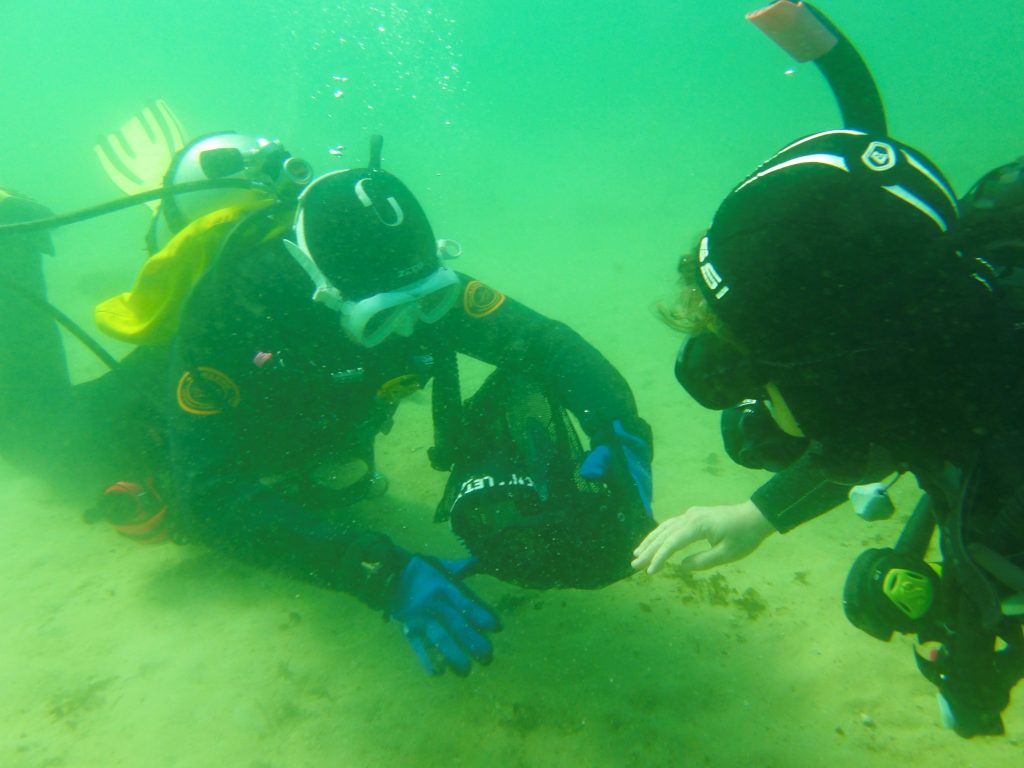
Hugh during an underwater beach cleanup
You’re currently a graduate ecologist at Biosis. What brought you into consulting?
Going from marine habitat work to being at Biosis could seem like a stretch as Biosis does not currently offer marine consulting. However, we do terrestrial and aquatic consulting, and, at its core, ecology is the same across fields. Ecology is about the structure of ecosystems, and understanding how different vegetation communities’ shapes ecosystems and supports fauna populations. Additionally, marine ecosystems are often degraded, which is also the case in many ecosystems Biosis works on. This decision also allowed me to work on projects related to renewable energy, which I am deeply interested in.
Perhaps the aspect that drew me in to consulting the most is the diversity of projects to work on. At Biosis, we work across the state, seeing very different ecosystems. Even in the office, I am never doing the same thing two days in a row. For instance, one day I could be doing like a referral for the EPBC Act, the day after do some background research to prepare for a new survey I’ll be doing soon.
On top of that, consulting is a real opportunity to learn from mentors who have worked for decades in ecology. As every member of the team reflects the image of the same company, it creates a very collaborative culture where everyone is supportive and willing to teach you what you need to succeed as an ecologist.
Have there been any particularly memorable projects you worked on since being at Biosis?
A little earlier this year, I went with our Senior Zoologist Caragh Heenan on a site to survey for the Southern Bell Frog, which is a threatened species. We found quite a lot of specimens and recorded them. That means that these bell frog communities are now protected for perpetuity and this was very rewarding.
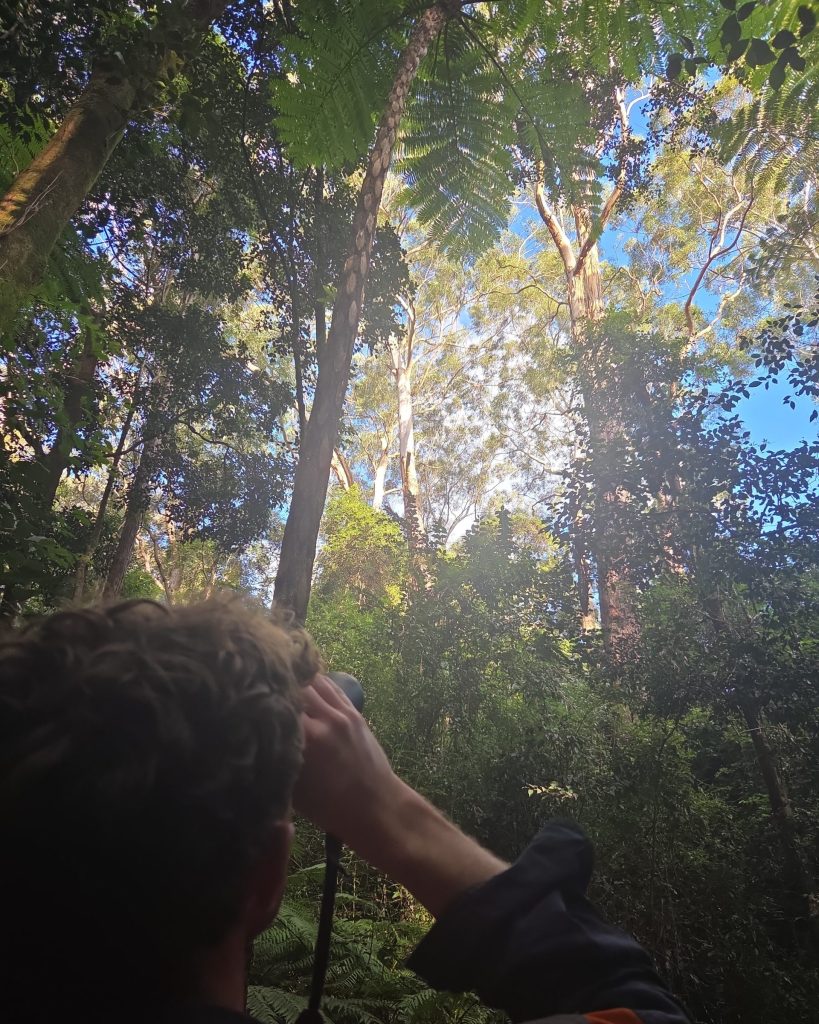
Hugh on a bird survey for Biosis
Another memorable time was when, after a very long day of survey, one of our bat ecologists had a feeling there would be some microbats at a place we surveyed and didn’t find any previously. Jake Schwebel and I went on our way home to check, and we found more than 30 microbats there! We ended up staying there for an hour, just looking at them and IDing them.
What are you most excited about for the next few months or years?
On the short-term, I am very excited for spring survey period and getting out back in the field very often. I’d also like to expand my skillset of aquatic ecology.
On the longer term, I have been very interested in the large-scale renewable projects that Biosis do. It’s been incredible seeing how Biosis is at the forefront of the science behind it – whether with Felicity Williams’ thermal bat monitoring or our Bird Collision Risk Model. I think renewables is where I want my career to go, and having ecology experience as well as learning from such experts in that field is invaluable.