2025 Daniel Gilmore scholarship winner’s research findings
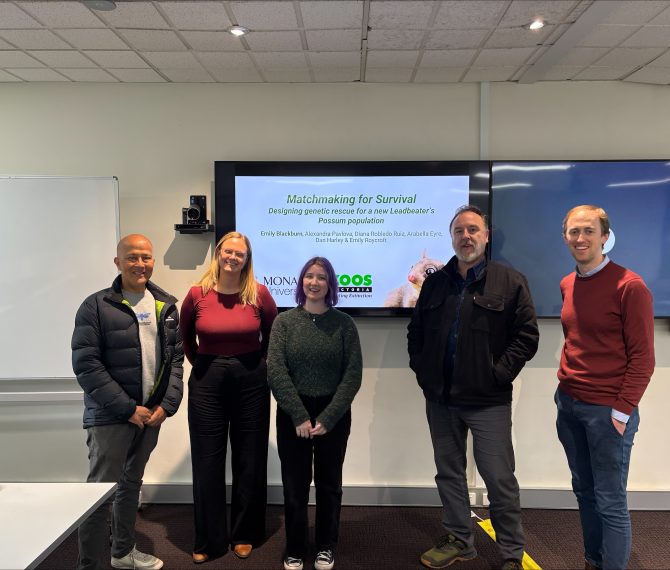
One year after being awarded the 2025 Daniel Gilmore Scholarship, Emily Blackburn presented to the Biosis team on the research findings from her Honours.
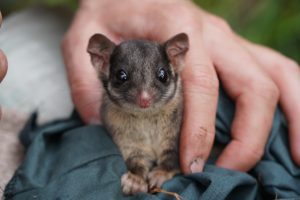
Emily’s project focused on the genetics and conservation of the lowland and critically endangered Leadbeater’s possum, Gymnobelideus leadbeateri.
She has shared the findings of her research below.
Project context
Australia’s biodiversity is under increasing pressure, with habitat loss and fragmentation isolating wildlife populations and accelerating extinction risk. One species impacted by these pressures is the critically endangered Leadbeater’s possum, one of Victoria’s faunal emblems found primarily in the mountain ash and snow gum forests of the Central Highlands in Victoria, with a small, isolated population found only in the lowland swamp of Yellingbo Nature Conservation Area. Due to the human development of swamp forests into agricultural land, altered hydrology and subsequent Eucalyptus dieback has occurred; the lowland population has become isolated and small, with fewer than 30 individuals remaining in the wild, leaving the population highly vulnerable to extinction. Recent studies have shown declines in the genetic diversity of the lowland population, as inbred possums produce fewer offspring, reducing the population’s overall capacity to adapt to changing environments, highlighting the urgency for genetic rescue.
The importance of genetics-informed conservation
As habitats become fragmented, movement between populations is reduced, limiting gene flow. Over time, this can lead to increased rates of inbreeding that reduce genetic diversity and, over time, can significantly reduce a population’s adaptive potential as well as increase the expression of harmful variation, leading to reduced fitness or mortality.
Applications of genetics-informed conservation include translocations, the introduction of a population into a new or historical habitat, and genetic rescue, the introduction of new individuals and their novel alleles into a genetically degraded population in the wild. These methods are Zoos Victoria’s plan for developing a new insurance population of Leadbeater’s possum in the revegetated swamp forest of Haining Farm, 9 km from Yellingbo.
Emily’s project aims
Analyse historic (536 samples from previous studies) and contemporary genetic samples (88 new samples for her project) of Leadbeater’s possums to assess trends in genetic diversity, as well as identify key candidates for breeding and pairs for translocation for genetic rescue.
– Assess the genetic diversity trends of Yellingbo
– Assess levels of relatedness between wild and captive lowlands and all captive individuals (predominantly highland, and some hybrid joeys)
– Identify key individuals to prioritise for breeding and identify the least-related pairs that are optimal for translocation to Haining Farm.
Results
The Yellingbo lowland population continues to decline in genetic diversity over the past three decades, which has the potential to manifest as reduced fitness and survivorship of inbred individuals, advancing the population’s trajectory to extinction. It is now more evident than ever that urgent genetic rescue is required.
A high level of relatedness exists between all current lowland individuals across the wild and captivity, supporting past identifications of significant inbreeding. These results support avoiding any future lowland x lowland pairings, as they will further exacerbate inbreeding depression. It is also recommended to potentially split any pre-existing lowland x lowland pairs.
The two hybrid joeys sequenced in this study (more hybrid joeys have been born that weren’t sequenced), siblings born from a highland mother and lowland father in captivity at Healesville Sanctuary, showed significantly higher heterozygosity than either of their parents. While this early evidence is an expected trend seen in first-generation hybrids, these findings demonstrate that carefully managed mixing between populations can restore genetic diversity. This gives strong empirical evidence to support the captive breeding program, and the ongoing monitoring of future generations will continue to inform management.
Ten preferred pairings to maximise genetic diversity of the next generation contained seven highland individuals and five lowland individuals, and were all mixed pairings. The first instance of a highland-highland pair was not until #155, and the first lowland-lowland pair was not until #173, again supporting mixed pairings and the avoidance of lowland x lowland pairs.
These results are directly informing Zoos Victoria’s fighting extinction program to influence breeding management and translocation decisions for Haining Farm, expected to be put in action in September of 2026.
How did Emily use the Daniel Gilmore Scholarship Funds?
“The funding helped ease some of my financial pressures throughout my honours year, allowing me to focus more fully on my research without the constant strain of day‑to‑day expenses. Importantly, it also helped cover ongoing medical costs associated with managing multiple chronic health conditions. Oftentimes, well-being can take a backseat when your funds are stretched, but the scholarship enabled me to prioritise my health without stress. I also have some funds saved to attend future conferences where I can present my work. The flexibility of a scholarship that’s not tied strictly to fieldwork or project-specific expenses is incredibly meaningful to support a researcher as a whole person, rather than just their project.”