Biosis Learning and Development Program brings cultural heritage team to the Lake of Scars, the Loddon Valley
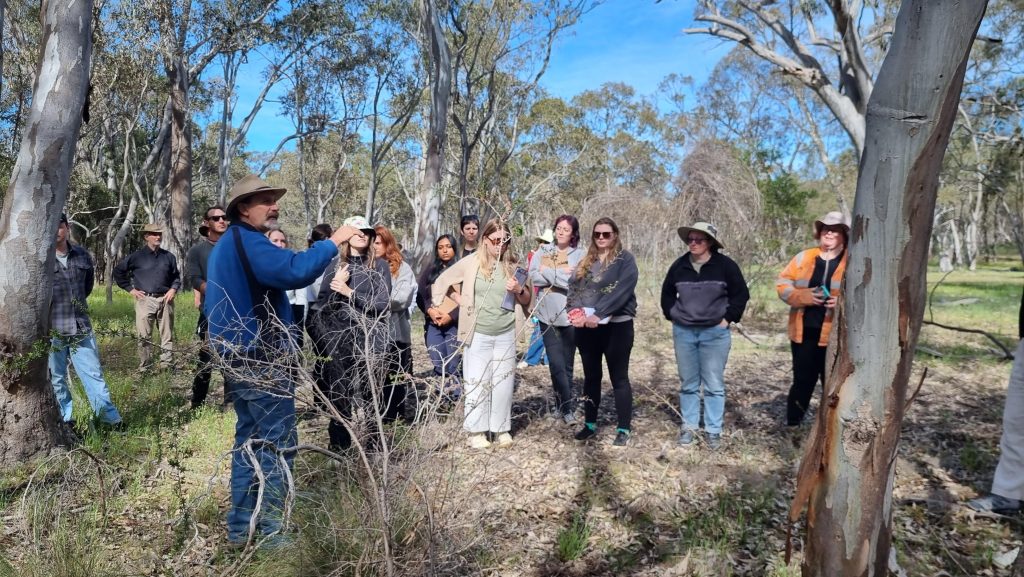
As part of the Biosis Learning and Development program 30 Biosis Aboriginal heritage consultants gained special access to Djaara Country in the Loddon Valley and gained local insight into the significance of Lake Boort and Kooyoora State Park.
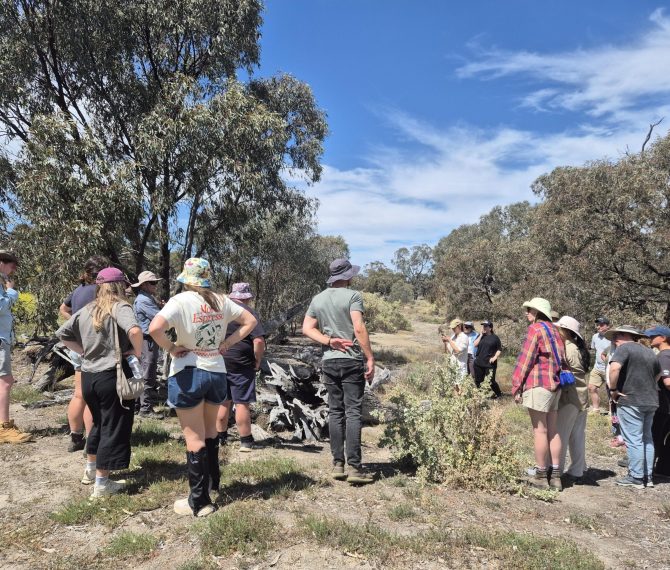
Did you know the Biosis Learning and Development program includes annual training sessions? Nearly 30 of our archaeologists and heritage consultants recently explored Djaara Country, in the extraordinary Loddon Valley, to learn about the Aboriginal cultural heritage of that special region.
Wandering along Lake Boort (geotag) the remains of cooking mounds can still be seen along the lake’s edge and hundreds of scarred trees stand sentinel within the lake which was once dense woodland. Also known as the Lake of Scars, the trunks of the black box trees bear the evidence of bark removal to create transport vessels, baby carriers, canoes and frames to construct huts and dry possum skins.
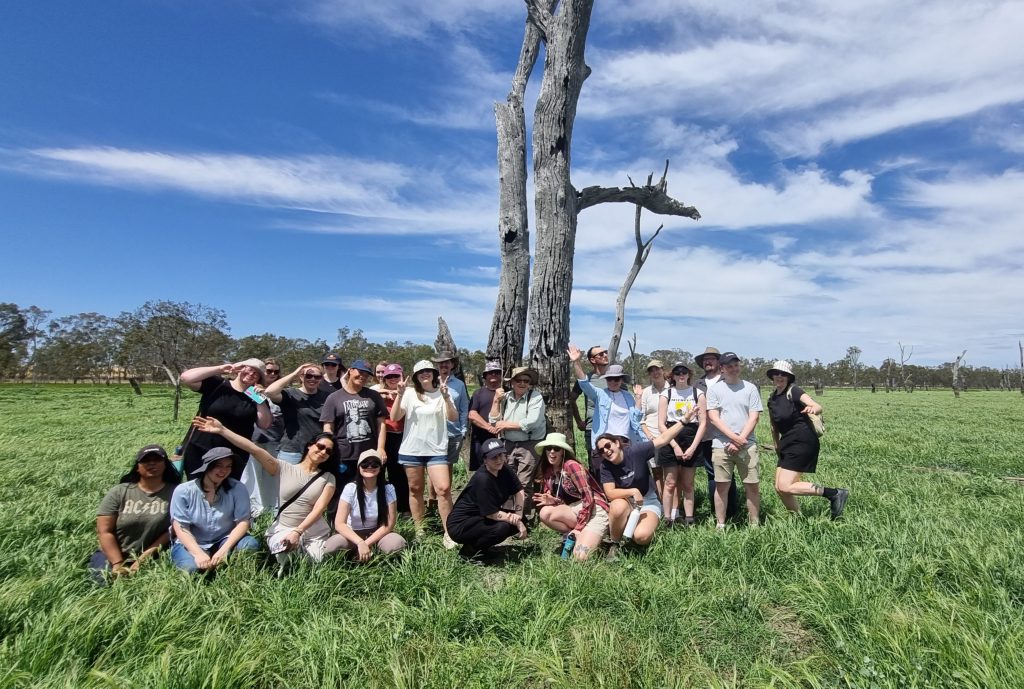
Kooyoora State Park is home to distinctive rounded granite geology and lush green forest wrapped in birdsong. Known to the Djaara people as Guyura (meaning mountain of light) it was not hard for the consultants to feel the spiritual significance of the landscape. Hundreds (and likely thousands) of Aboriginal cultural heritage places are located within Kooyoora in the form of culturally modified trees, natural rock water wells (gnammas), hearths, stone tool scatters and quarries.
Countless Indigenous songlines culminated here with people meeting at the gnammas and animal shaped tors (rock formations). Kooyoora also bears the vestiges of the Victorian gold rush of the 1850s with the remnants of mining activity dotted throughout the park. Biosis staff spent time with an inspiring and passionate team of local knowledge holders who helped them expand their cultural heritage horizons in an atmospheric location.
Thank you to:
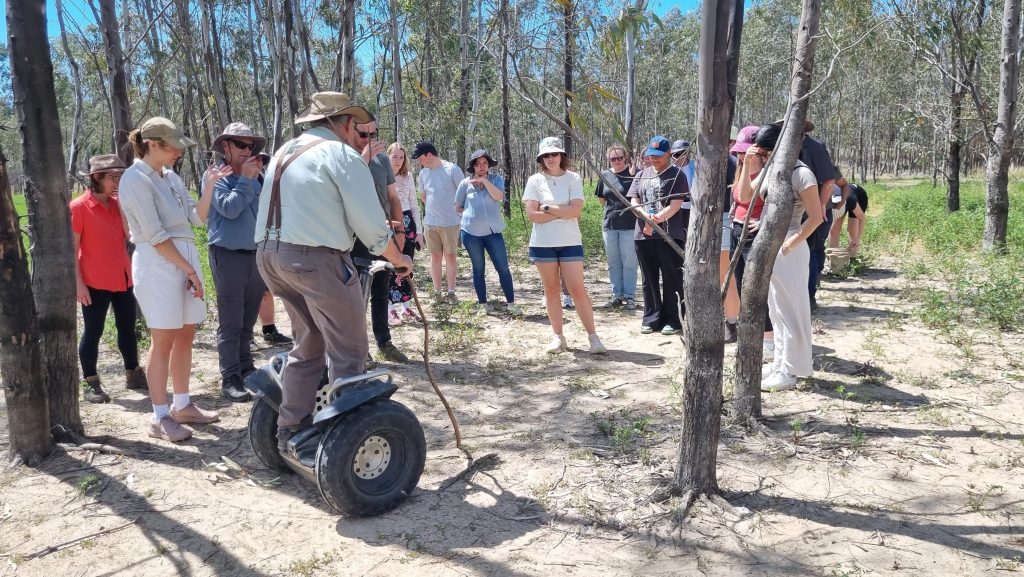
Arborist Danny Draper (Urban Tree Management Australia) who shared his expertise on how to determine whether a tree had been culturally modified or scarred by natural processes. Local guide and founder of Yung Balug Aboriginal Artefacts Museum Paul Haws. Paul shared his keen interest in local Aboriginal history and the environment around Lake Boort. The archaeologists tried to restrain themselves from mentally cataloguing the impressive collection of grinding stones, axes and implements made from wood and woven reeds in the museum known to Paul as the “Keeping Place”.
Botanist and ecologist Paul Foreman (Blue Devil Consulting) who shared his knowledge of the ecology and revegetation efforts at Kooyoora and Bridgewater. Paul is also highly knowledgeable about Indigenous burning practices across the grasslands of south-eastern Australia, a topic of particular importance to Traditional Owners, heritage consultants and ecologists. Thanks also to local guide Robert Scholes (Home | UNEARTH) who has explored Kooyoora since the 1950s. Rob also mentors members of the Djaara community sharing his knowledge of the ecosystems and cultural heritage at Kooyoora and surrounds. Geomorphologist Neville Rosengren who put together “rock solid” maps and fact sheets on the geomorphology of the Loddon Valley region specifically for the team.
Related News