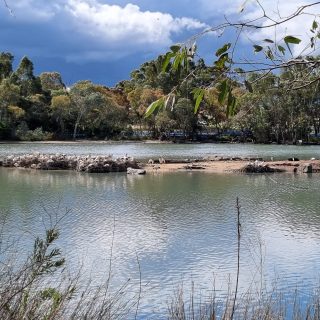
Northsea Apartments Heritage Interpretation Plan
Wollongong Social Housing Legacy Included in Biosis Heritage Interpretation Plan
Biosis are pleased to have delivered the Archaeological Salvage, Heritage Interpretation Plan (HIP) and interpretative content for a mixed housing development block in Wollongong at 15 Crown Street. The housing model is a collaboration between developers Traders In Purple and Homes NSW and integrates both private, social and not-for-profit affordable housing units without segregated lifts or common spaces.
Built on the site of a former mid-century (C20th) social housing complex in Wollongong’s City Centre, the 12-storey Northsea building includes thirty-eight private apartments, eighteen tenancies within 10 social housing dwellings, and six affordable housing apartments. It was important to the Biosis heritage consultants to make sure that whatever interpretation device, storyline theme or wayfinding design recommended for the site, that the plan was relevant to the nature of the site and relevant to those who experienced the building.
Interpretation is about telling stories and engaging with a wide variety of audiences, so it was important to clarify the audiences would be from a wide variety of backgrounds and that the site could offer the lobby area as the main space for interpretation. Given the history of the site as a former social housing block, for 70 years, and that the Northsea development model would continue offering affordable housing using a mixed-use model, this unique social history was acknowledged as one of the historical themes, as a respectful nod to the importance of housing for all Australians, and also as a recognition of architectural history.
These themes were all acknowledged by Traders in Purple and included in the final design of the building.
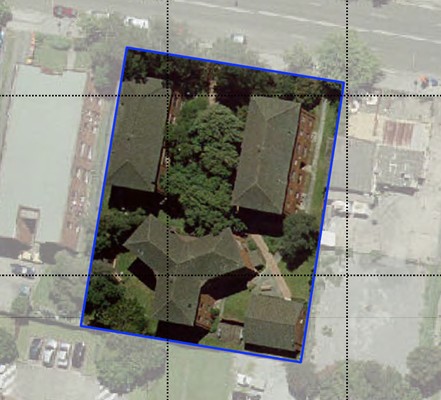
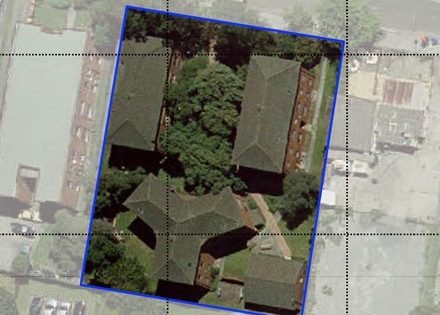
An aerial shot of three social housing towers built on the project site during the 1950s.
Historical Themes Identified Through Research
The site’s legacy as a place enjoyed by families over thousands of years was researched in depth by the Biosis Historical Heritage Team. It was originally occupied by the Traditional Owner’s The Wodi Wodi People (pre-1835), then following colonisation by European cottage farmers (1835-1850s) before several generations of the Copa family (1850-1907) made it a permanent home base and space for community engagement. Eventually the land was chosen as a future home for not one but twenty-one families when housing was desperately needed after World War Two (1949-2010) and the NSW Housing Commission built apartments on the space. These histories were integrated into the Northsea site lobby entrance and landscape garden designs, through interpretation signage, flooring and landscape gardens.
Biosis heritage consultants proposed four historical themes to guide the interpretation plan and content:
1. Aboriginal connection to place – On Wodi Wodi Country
2. A place to call home.
3. The world at your doorstep
4. Crown Street community
Biosis proposed the use of a range of interpretative devices to apply those themes:
Device 1: Signage and displays.
Device 2: Public art.
Device 3: Landscaped gardens.
Archaeological Evidence
An historical archaeological salvage excavation was undertaken on the site in 2022, and due to past developments, no historically ‘significant’ Aboriginal or European objects were recovered. The artefacts that were uncovered during this excavation were commonly found in disturbed urban residential archaeological sites.
There were Aboriginal artefacts, and some historic 19th Century glassware recovered from the site during salvage works, and the original brick pathway (a garden path) which dated back to the early cottage era occupied by the Copa Family after 1850.
These archaeological finds, while not uncommon for these types of dwellings, did offer the heritage team the opportunity to accurately date the site and learn more about the wider Wollongong social history of various periods. In particular helping to inform the interpretation themes adopted such as the theme of The World at Your Doorstep.
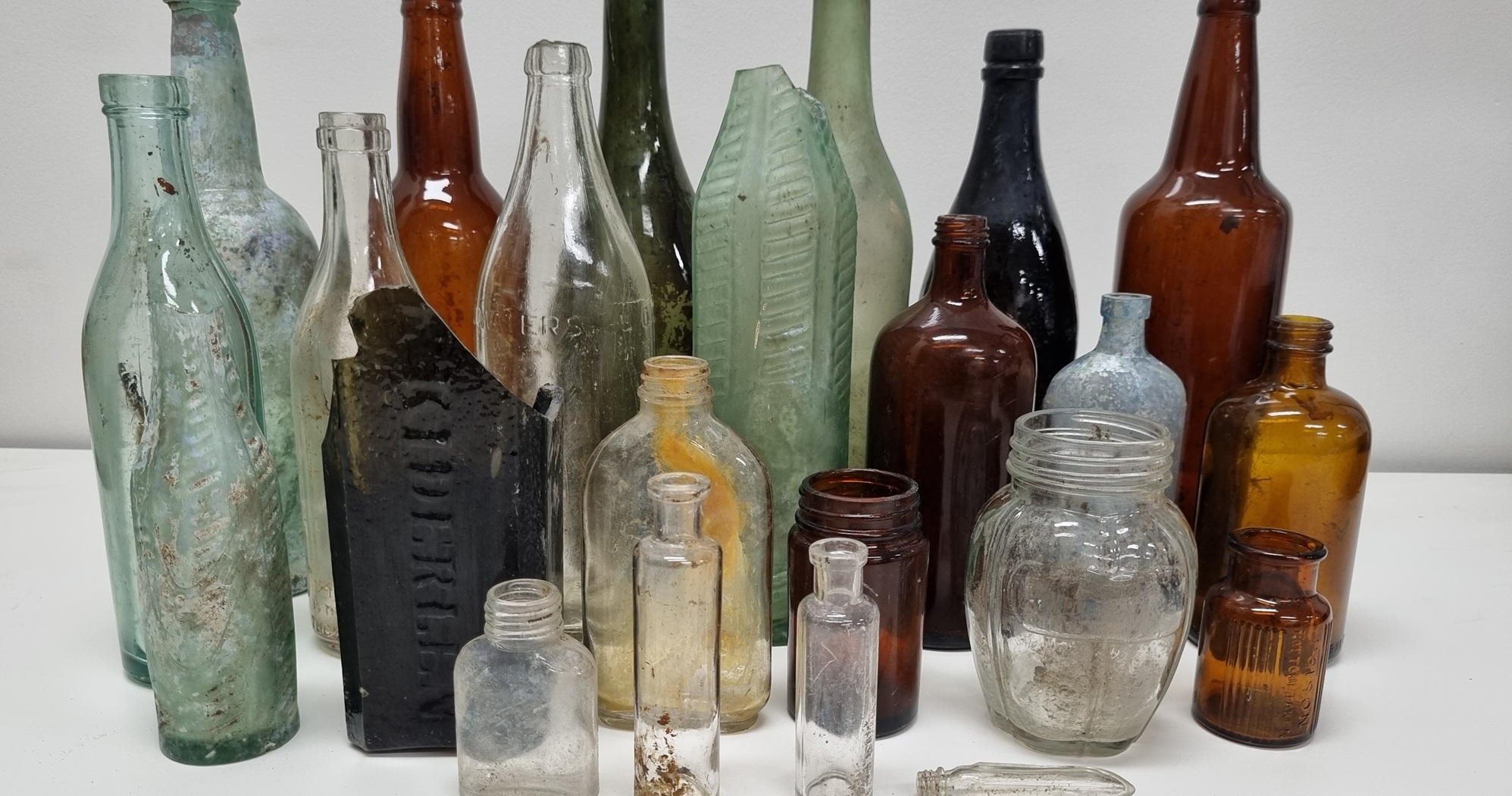
Four Key Storylines Proposed by Biosis Heritage Consultants to Guide Design Choices
Theme 1 Aboriginal Connection to Place on Wodi Wodi Country
Device: Public Artwork and Native Plantings
As always Biosis recommended Aboriginal Traditional Owners to be consulted to determine which motifs or history to include on the development site.
The site sits within the traditional lands of the Wodi Wodi people of the Dharawal. The traditional Wodi Wodi land extended from around Stanwell Park to the Shoalhaven River and as far inland as Picton, Moss Vale and Marulan. The study area is in the vicinity of the Dharawal language group, with many of the town and place names of the Illawarra derived from this language. Traditional stories explain the arrival of the Wodi Wodi people bringing with them the cabbage tree palm (Dharawal) from which their language is named. Examination of shell middens in the Illawarra show evidence that Aboriginal people were living here 6000 to 7000 years ago, both on the coast and at Lake Illawarra. It is widely accepted that Aboriginal occupation of the south coast by Aboriginal people dates to around 20,000 years ago.
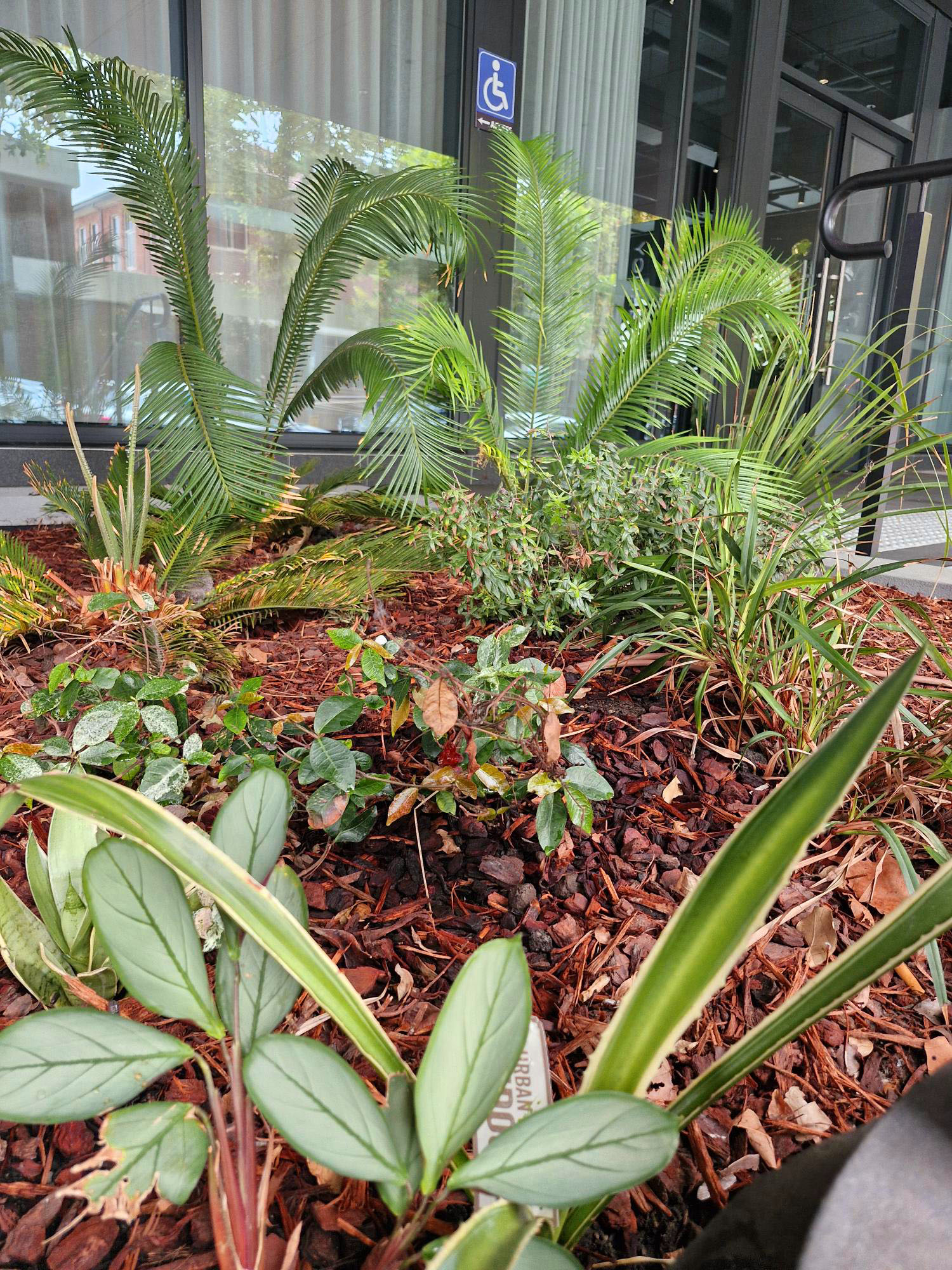
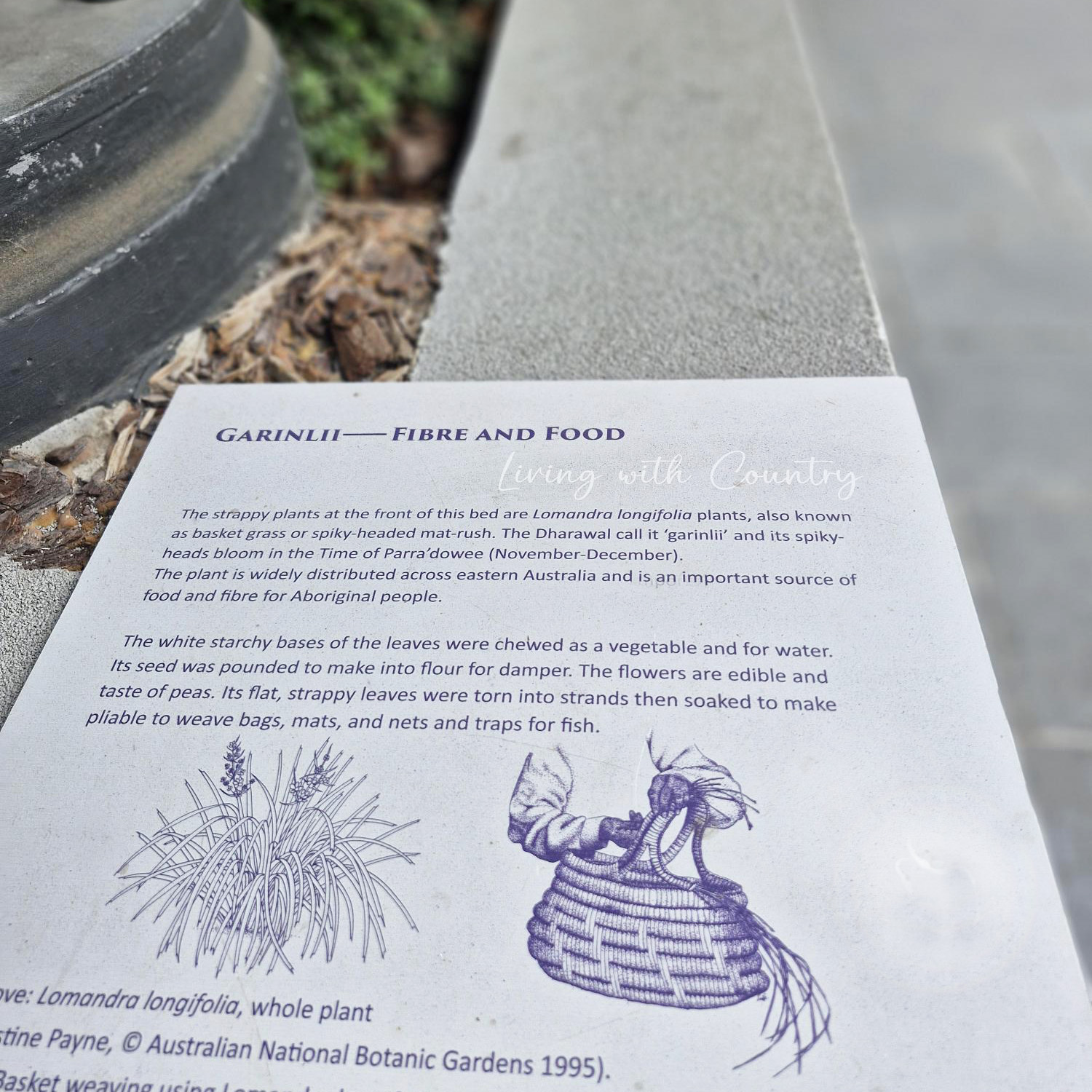
Biosis recommended acknowledging Wodi Wodi history using native plants, such as Lomandra longifolia in the garden bed with associated identification and information signs.
Theme 2 The Copa Family Home for 90 Years.
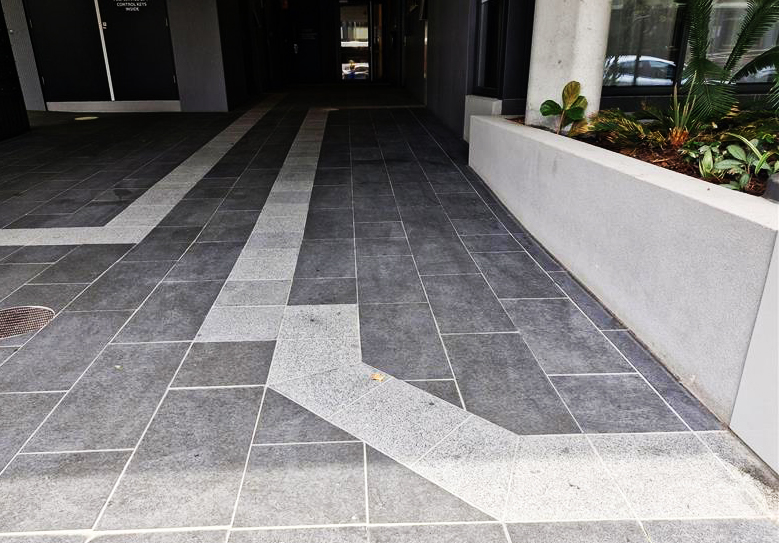
Device: Lighter pavers in the courtyard.
The Copa family occupied the site for a century, from the mid-1850s until the social housing units were built in the 1850s. The Copas were community minded people and invested much of their time and energy in local organisations that celebrated sport and supported the less fortunate. They were active members of the Roman Catholic community, no doubt encouraged by living opposite St Francis Xavier’s cathedral and school. They were also significant members of the Wollongong Cricket Club and the Wollongong Surf Club, the local theatre company, the Illawarra Mercury, the Illawarra District Choir, the Red Cross and the Wollongong branch of the Manchester Unity Independent Order of Odd Fellows, supporting the sick and unemployed.
Biosis recommended using different coloured pavers to show where the former buildings used to be on the site and include a plaque which described the family home.
The lighter pavers in this forecourt have been used to show where the former buildings used to be.
The Copa’s property was described in 1840 as “splendid”
…situated in Crown-street, Wollongong, about two minutes’ walk from the Government Wharf, containing Eight Rooms, with a detached Kitchen, and Servants’ Rooms, a three-stall Stable, Storeroom, and Coach house, and good Garden in the rear, and is admirably suited either for a Boarding School, a tavern, or Family Residence.
Theme 3 The World at Your Doorstep.
Device: Signage
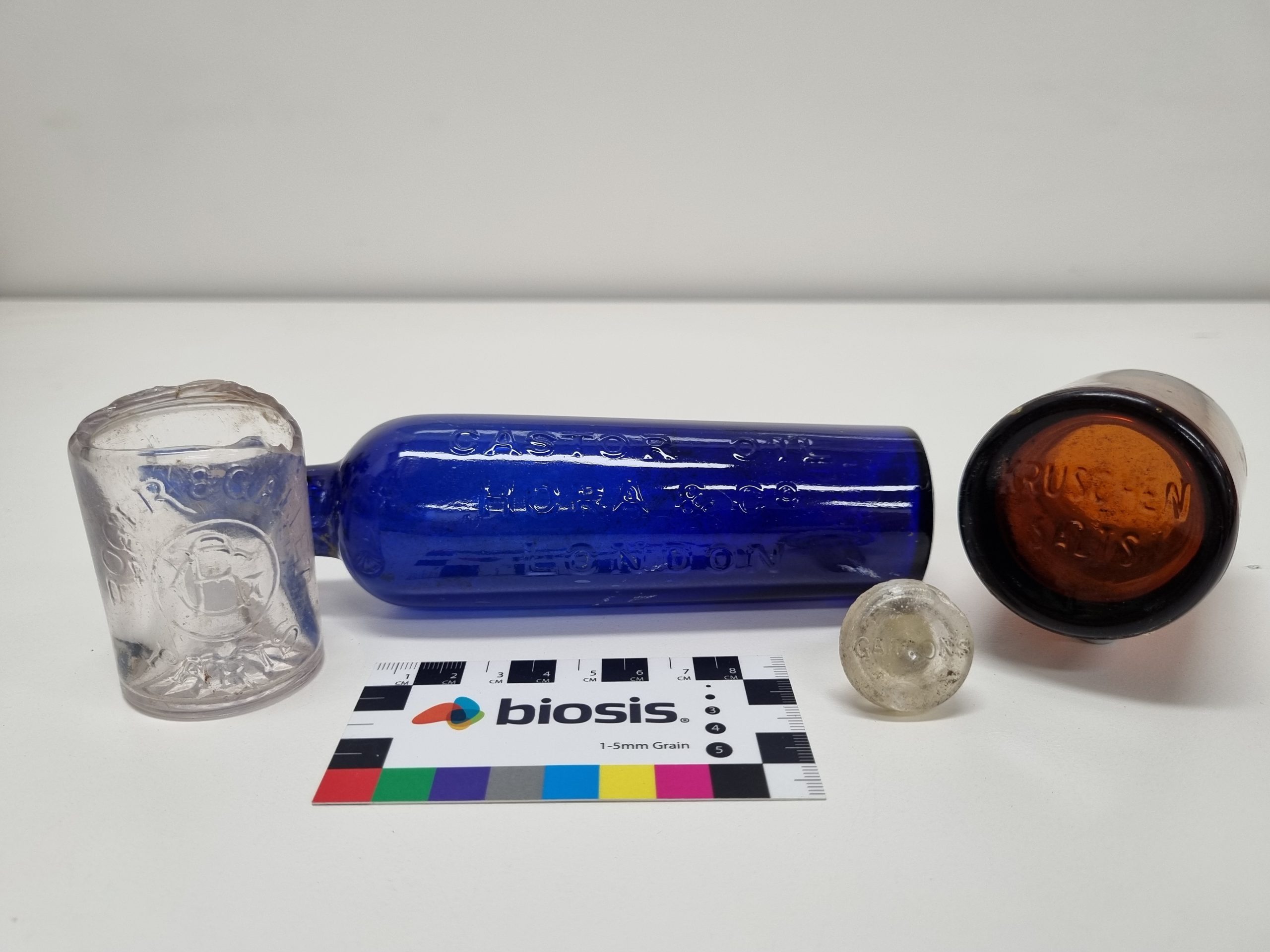
During a 2022 excavation Biosis archaeologists uncovered a 19th Century rubbish tip with glass bottles which helped offer them evidence of the Copa’s family diet, hygiene and cleaning methods, and more broadly what products were being traded from other countries via Australian ports, including the Illawarra Port.
Products were being sold from both the Unites States and Europe suggesting a healthy level of trade between Australia and the rest of the world, and interestingly that middle class families of Illawarra could afford the luxury of global flavours. Most of what was found in this deposit included glass bottles used for ginger beer, wine, whiskey, spirits, beer, schnapps, gin, sauces, vinegar or oil, champagne, pickled food, pharmaceutical products and blacking liquids. The rubbish pit also contained a range of tea-related items such as teacups, saucers and plates.
Two items from the USA included a pharmaceutical bottle manufactured for Park Davis & Co. dating from 1885 and Bromo Seltzer, a headache cure product manufactured for Emmerson Drug Company, based in Baltimore, dated to 1952-1983. Three items from England included a castor oil bottle manufactured for Hora & Co from London dating to 1860-1915, a bottle of H.P. Sauce manufactured for Frederick Gibson Garton in Nottingham dating to 1884-1895 and a Kruschen Salts bottle, a product marketed as a cure for headaches, lethargy and indigestion, manufactured for E Griffiths Hughes of Manchester, dating from 1920.
One bottle from Scotland: a whiskey bottle manufactured for James Stewart & Co in Paisley, dating to 1852-1903.
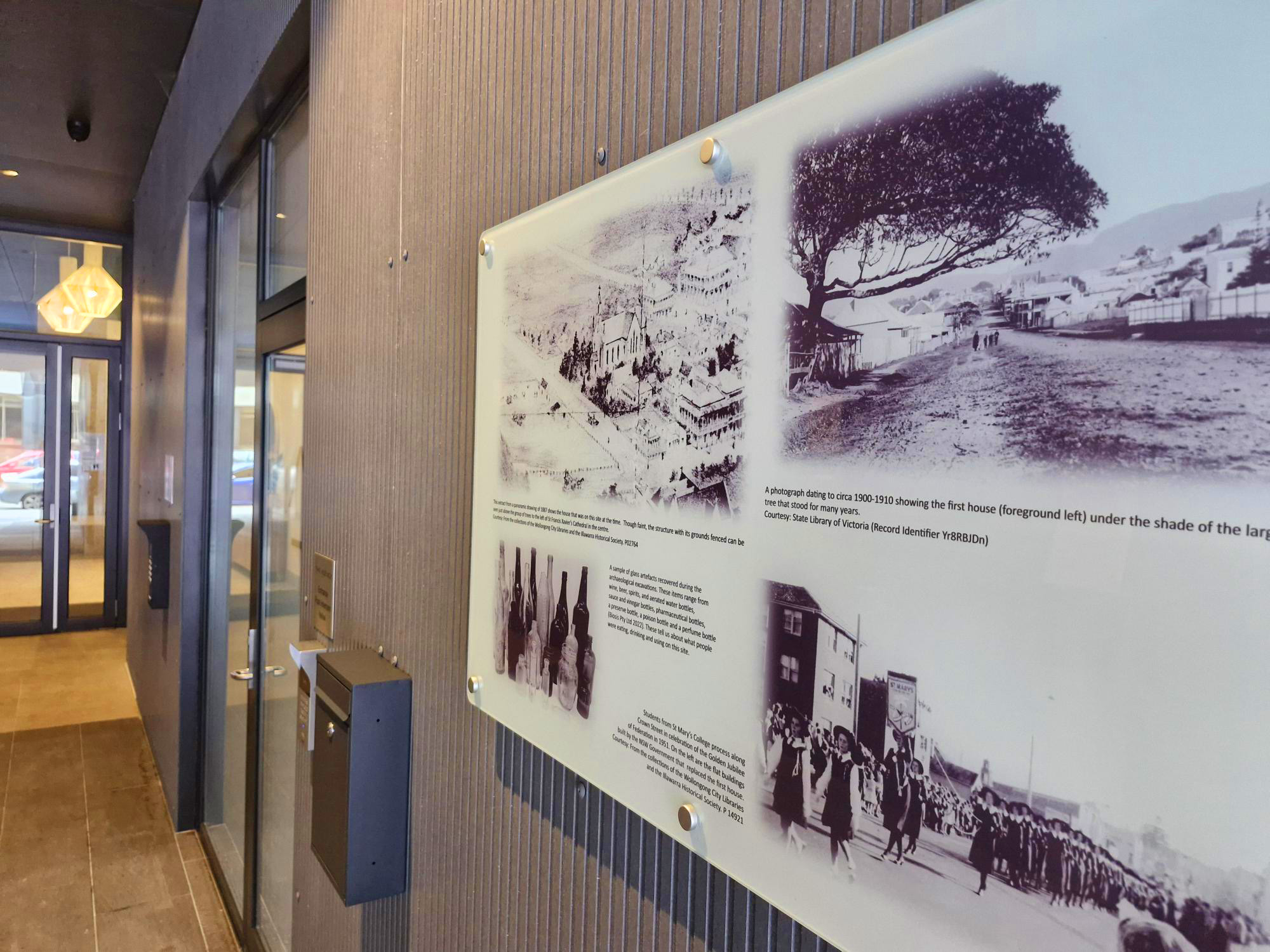
A collection of intact bottles was preserved digitally as a photograph and imprinted on a glass sign in the lobby.
Theme 4 Housing for All and the Crown Street Flats
Device: Signage
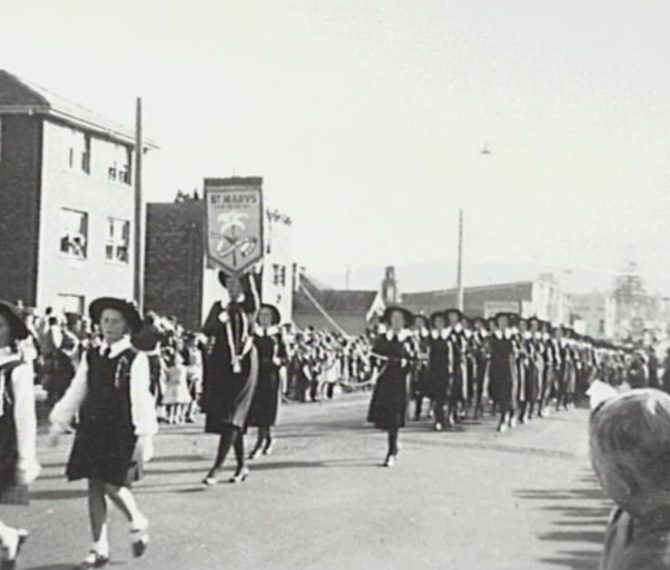
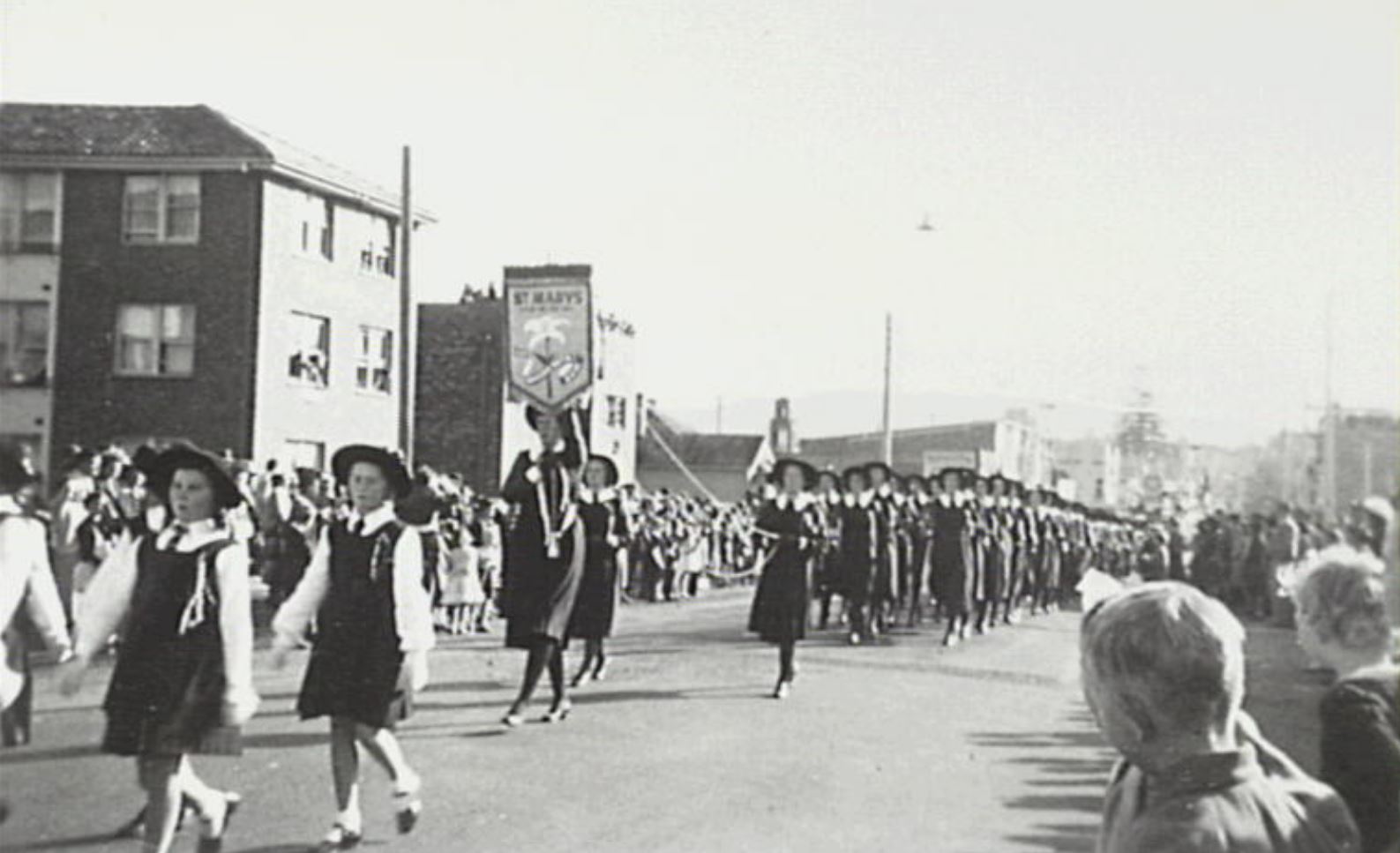
In 1942, the NSW Housing Commission was established with the aim of building apartments and small houses to provide working families and returned services personnel with a pathway to home ownership. The site at 15 Crown Street was chosen for three apartment blocks because of its inner-city location and proximity to local services, finalised by the mid 1950s. The Commonwealth Housing Commission promoted housing as a right for all Australians but specifically targeted those workers who were on low incomes. Fortunately, during the historical research phase Biosis heritage consultants were able to locate an original photo of the apartment block in the background of a photograph during a Wollongong parade for the Queen’s Jubilee in 1954.
The new Northsea development will continue to cater for those with special needs, except it moves beyond simply the availability of affordable residential space, but considers the accommodation needs of carers as well, with 8 out of 10 social housing units featuring dual key access, so carers and support workers can comfortably reside in the adjoining unit.
The photograph of the original 1950s social housing blocks has been included in an interpretation panel at the lobby entrance in memory of the first stage of social housing to occupy the property.
Site’s Legacy
This mixed-use development has now been finished at 15 Crown Street, and local residents can be seen wandering in and out of the lobby space. The metal historic signage which shares some of the stories of its past hangs subtly on both sides of the entrance door, and hopefully the new Northsea community will stop occasionally and pause to read them. The site’s legacy as an inclusive space for families of all walks of life will live on through their footprints and they may even ponder on the importance of Lomandra to the Wodi Wodi people or look at the photo of children marching down Crown Street and realise they are now a new generation of coastal families contributing to the Illawarra landscape, as others have before them.