
Biosis senior ecologists apply GPS sensors to wildlife to accurately report on how animals navigate through their habitat
Biologging is a method in ecology that involves attaching miniaturised electronic devices (bio-loggers) to wild animals in order to monitor their behaviour by analysing the data captured by the device. While biologging devices come in many forms and are designed to record a variety of data types, the most common tracking devices are GPS loggers.
Biosis have applied this technology to a range of species, including waterbirds, shorebirds and seabirds, to accurately contribute to detailed habitat use assessments and species surveys in Australia. These devices record data on the animal’s movement and behaviour, and importantly how they navigate through their surrounding environment throughout the day and the night.
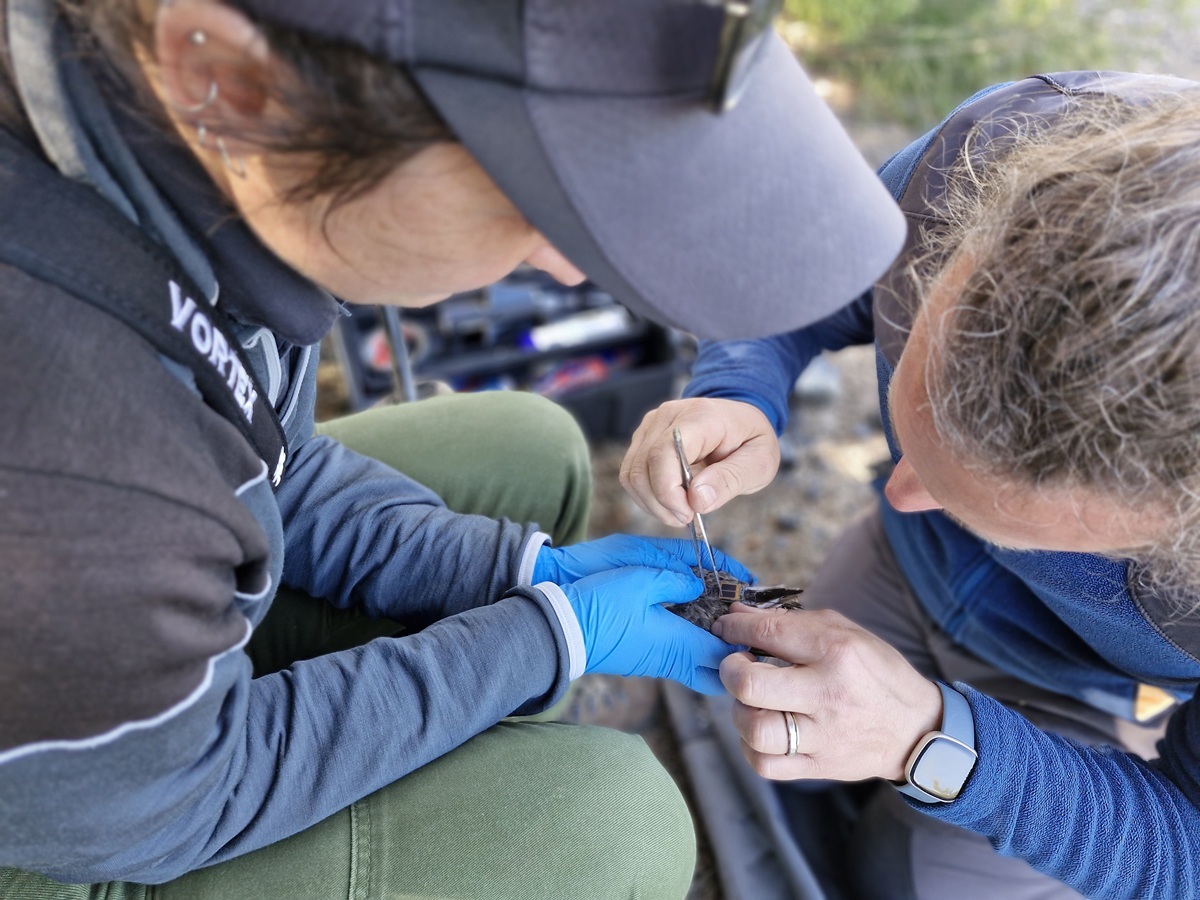
Biologging allows researchers to obtain information that would be impossible or highly difficult to collect through direct observation, especially for elusive, nocturnal or migrating species.
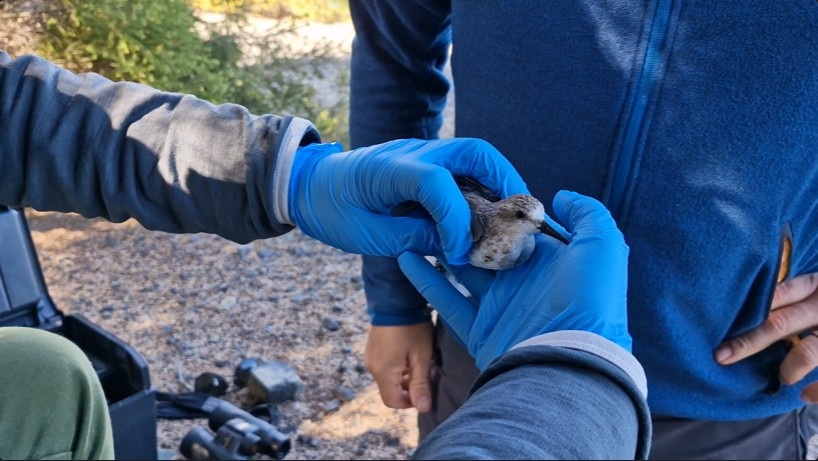
24/7 Monitoring
Biologging, tracking wildlife with GPS loggers, has become a very helpful tool for gathering detailed data on animal behaviour and movement that can’t be retrieved through observational surveys. It enables ecologists to capture data regardless of the weather conditions, time of day or remote location. Each logger deployed will collect thousands or tens of thousands of locations and provide continuous behavioural information.
The data can help inform critical habitat use
The data retrieved can identify a specie’s foraging grounds (feeding) throughout the day, their breeding sites, and migration corridors (including those used in the open ocean or remote areas). The data can help map how an animal uses certain spaces during important breeding or seasonal periods and provide insight into behaviour that may not have been considered.
Long-term data collection
In addition to recording movements and behaviour 24/7, biologging allows ecologists to collect data over long periods of time (from a few months to several years, depending on the study species). Given the large amount of data that a single tracked individual can provide, only a small number of individuals are usually necessary to generate a substantial amount of information at the scale of a specific project.
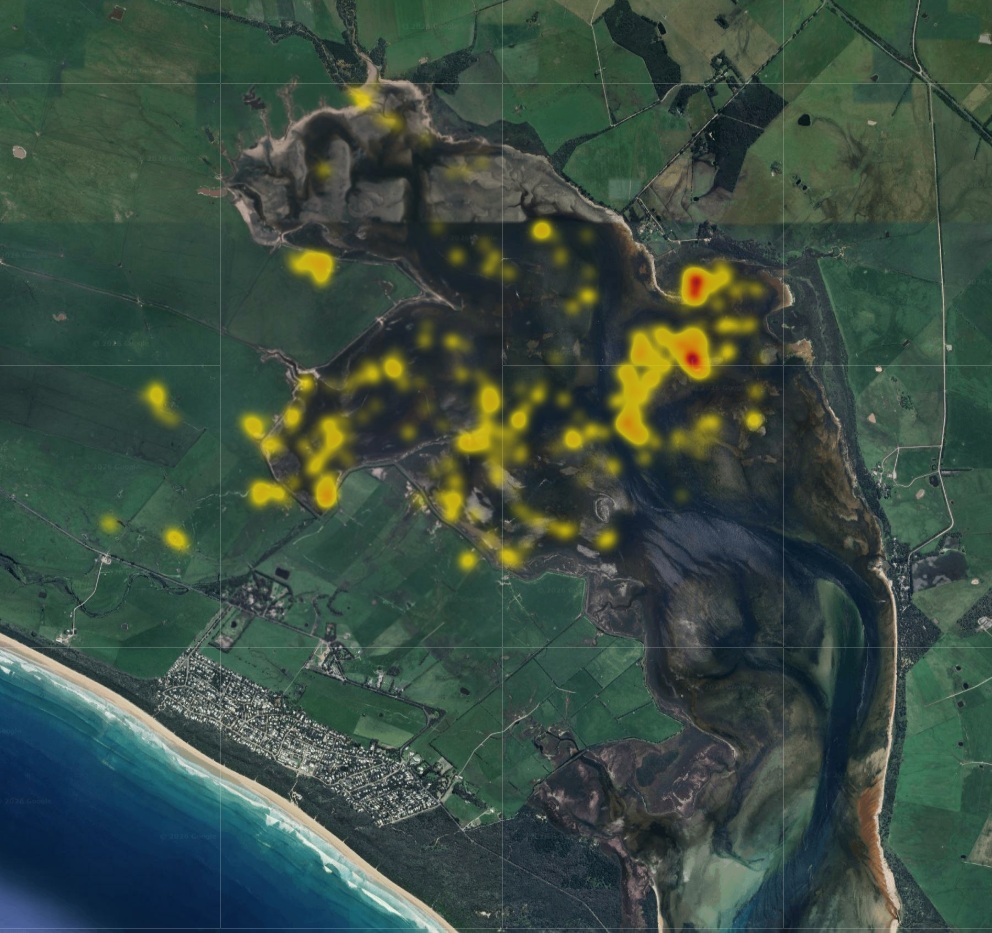
Data about localised species can help inform ways to mitigate the impact of proposed developments on species. It may help inform design decisions, or the location and use of parts of a property.
It can help advise on seasonal closures of areas or designing projects which need to consider peak migration or breeding patterns.
By collecting data on animal movements over time, along with other variables (like water temperature), ecologists can do comparisons to see how animals respond to changes in their environment over time.
Informing Management and Policy
- Biologging provides accurate data to support decision-making for species of concern.
- Biologging offers real-time feedback.
There are two primary approaches, often combined in modern devices that capture the data, and then visually display the data on a variety of mapping and GIS applications.
Transmitting devices: Data is transmitted wirelessly from the device to a satellite, ground station, or nearby receiver.
- Advantage: Data can be obtained even if the animal is not recaptured.
- Limitation: Data volume is typically lower due to power and bandwidth constraints.
Archival devices: Data is recorded and stored in the device’s internal memory.
- Data Retrieval: Requires the physical recapture of the animal and recovery of the tag.
- Advantage: Can collect large, continuous, high-resolution datasets since data transmission limitations are avoided.
- Contact our bio-logging team to determine if this method will provide the answers you need to better understand a specific species of concern.