
Client: Private Property Owner, via NSW DCCEEW Credit Supply Taskforce Assessor Services
Location: Central West, New South Wales (NSW)
Year: 2023 – 2025
Service: Biodiversity Stewardship Agreement
Background
Biosis consultants were contracted to assess a proposed biodiversity stewardship site of 600ha on the lower inland slopes of the Great Dividing Range (within the Southwestern Slopes Bioregion) between Orange and Dubbo.
We were tasked with assessing the biodiversity value of the sites, and the potential for the site to generate ‘ecosystem credits’ and ‘species credits’ in accordance with the NSW Biodiversity Offsets Scheme. The project also involved determining the cost to the owners to preserve and manage (as biodiversity stewards) the site over 20 years and into perpetuity, as well as the potential market value of the biodiversity credits generated.
The biodiversity stewardship site occupies the eastern and western boundaries of a large grazing property which is over 1330 hectares in size and begins at the Catombal Range in the west, extending down protected lower slopes to a valley before rising again into broad, rocky, elevated slopes in the east. The property is an active sheep and cattle grazing business. The biodiversity stewardship site now occupies the upper and lower slopes of the property.
The biodiversity stewardship site is around 600ha mostly steep hills of native woodlands, with lower slopes supporting areas of critically endangered Box Gum Woodland vegetation, and the general elevation ranged from 530 m to 780m.
Biosis’ Accredited Assessors applied the NSW Biodiversity Assessment Methodology (BAM) and conducted a range of native flora and fauna targeted surveys between 2023 and 2025.
BAM Methodology Applied
The species-specific survey methods to determine significance of the site included targeted flora and fauna surveys, spotlighting, camera trapping, nocturnal call back, land resilience and habitat use assessments. Most importantly, consultants also identified factors threatening the ecological function of the site to help inform the long-term management requirements of the site to maintain its value.
Outcome summary
- As a corridor for mobile fauna species and seed and/or pollen dispersal of some flora species the site offers connectivity with other areas, especially ridgelines where continuous connection is present and via numerous interconnected perennial waterways.
- Four threatened species were identified as using the site including; Barking Owl, Koala, Superb Parrot and Masked Owl.
- Twelve PCTs (Plant Community Types) were identified within three vegetation types of Western Slopes Grassy Woodlands, Western Slopes Dry Sclerophyll Forests, and Inland Rocky Hill Woodlands.
- A critically endangered ecological community was identified: White Box, Yellow Box, Blakeley’s Red Gum, Grassy Woodland, and a range of Koala Use Trees.
- Flora and fauna habitat features were identified including large woody debris, hollow-bearing trees, availability of flowering shrubs and feed tree species.
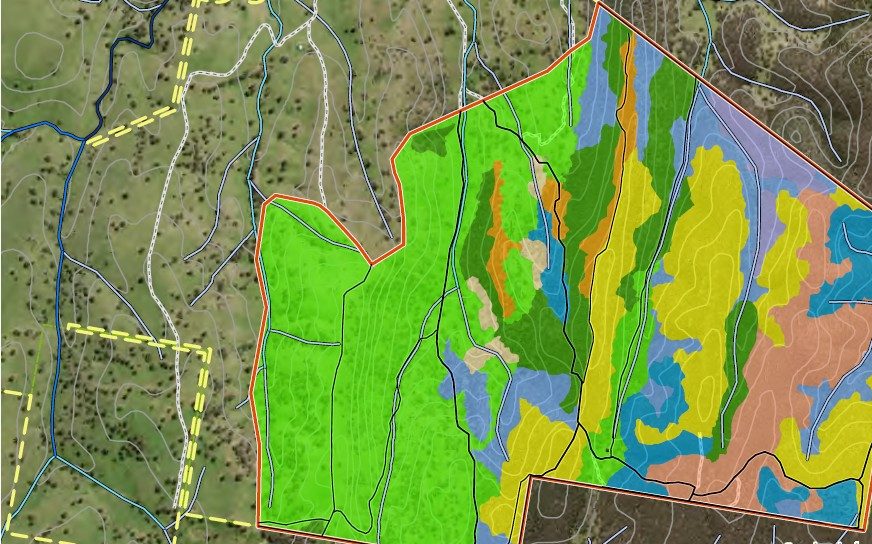
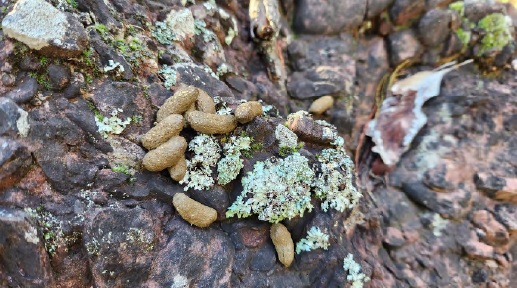
Credits calculated over 614ha
This site was assessed as able to generate:
- 3249 ecosystem credits for native PCTs
- 7187 species credits for native threatened fauna
These credits have an estimated potential market value of >$10 million.
Recommended stewardship requirements and cost
Biosis ecologists recommended a range of annual management requirements to improve the ecological condition of the biodiversity stewardship site including fencing, annual surveys to prove that species are present, control of feral goats and deer, and control of invasive weeds such as St John’s Wort.
The cost of the management of the site, paid to the landowner (biodiversity steward) via annual payments funded by the sale of the biodiversity credits, beyond 20 years, was calculated to be approximately $1.5 million based on the site’s Total Fund Deposit (TFD).