
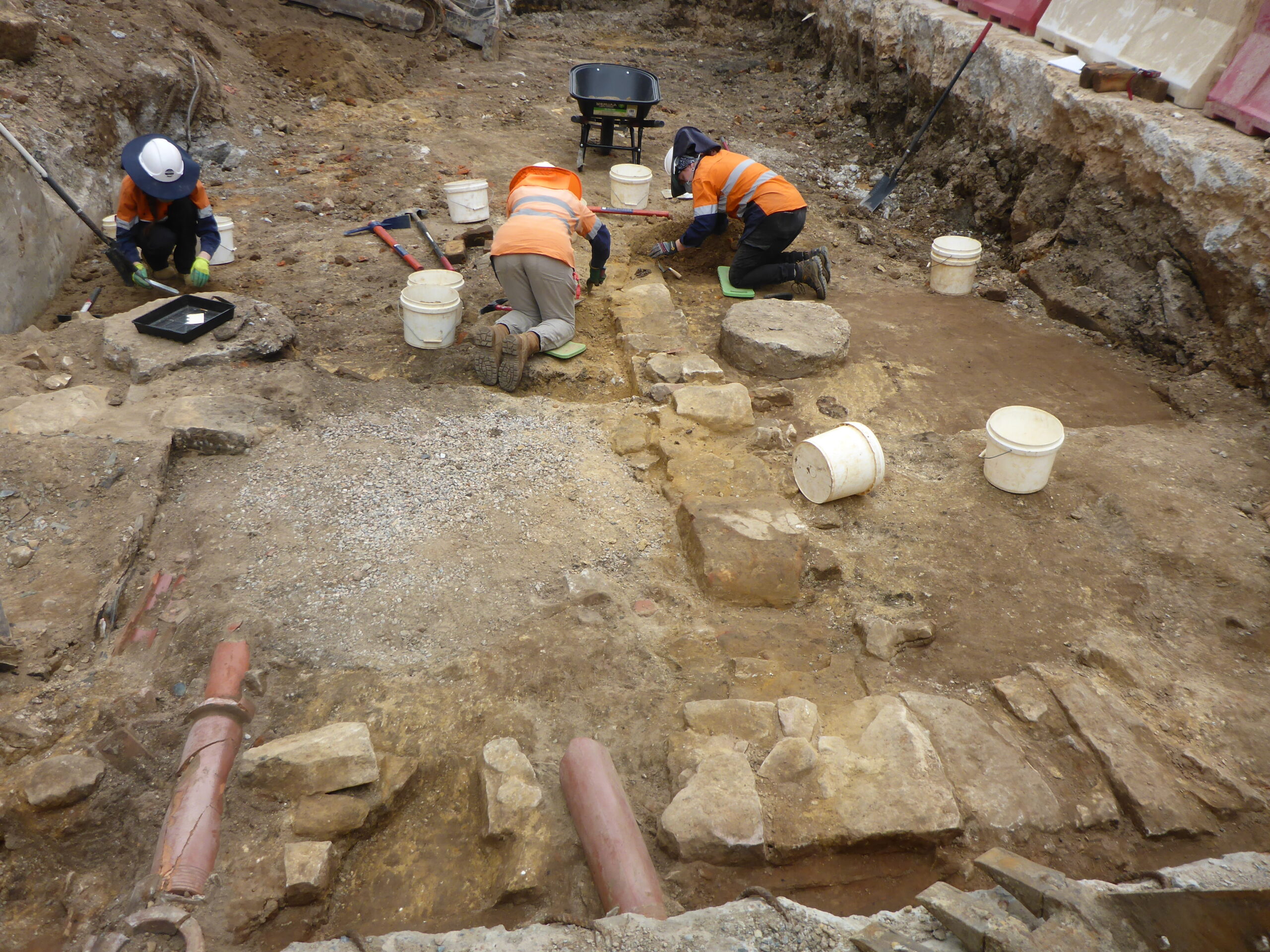
Biosis offers an end-to-end service for archaeological excavation. From constraints and opportunities assessments and archaeological assessments to obtaining excavation permits. We will undertake the fieldwork and analysis to produce a quality report utilising the knowledge of our specialist team of historical archaeologists.
Biosis has offices in Sydney, Western Sydney, Gosford, Wollongong, Newcastle, Wollongong, Geelong, Melbourne, Ballarat, and Albury, Biosis possesses a high geographical reach and excellent local knowledge of archeological issues relevant to your region.
Our consultants operate under the Heritage Act 1977 (NSW) and Historical Act 2017 (VIC), as well as working to the standards set by the International Council on Monuments and Sites (ICOMOS) Burra Charter. They follow the industry standards set by the NSW Code of Historical Archaeology Code of Practice and Victorian Guidelines for Investigating Historical Archaeology Artefacts and Sites.
With 40 years of experience behind us and a wide range of specialist archaeologists we conduct excavations which respect heritage while cutting unnecessary costs and reducing delays.
Whereas excavation involves digging down through stratigraphic layers to uncover the remains of buildings or other artefacts, a survey involves walking across the landscape and making a record of what is visible on the surface, along with noting any impacts which could have disturbed the archaeology below.
After completing desktop background research, Biosis Heritage Consultants will conduct a field investigation on the site of your proposed works. The field investigation aims to conduct a systematic survey of the study area, targeting areas with the potential for historical archaeology.
If areas of potential are identified and cannot be avoided by the proposed works, Biosis will advise the most appropriate approval to obtain to allow your works to proceed under the proposed approval pathway. Archaeological works could include monitoring, testing or open area excavation. An unexpected finds protocol may even be appropriate, with an archaeologist only being on site when a potential relic is identified during works.
All archaeological excavation permits for larger excavations require a formal report including an artefact catalogue and artefact reports (by category, where relevant), along with context sheets, photo logs, plans, and associated documentation. Other, smaller documents may be provided if monitoring or testing has been undertaken. Biosis will provide you with an appropriate report after excavations to ensure compliance with the relevant guidelines and conditions of approval.
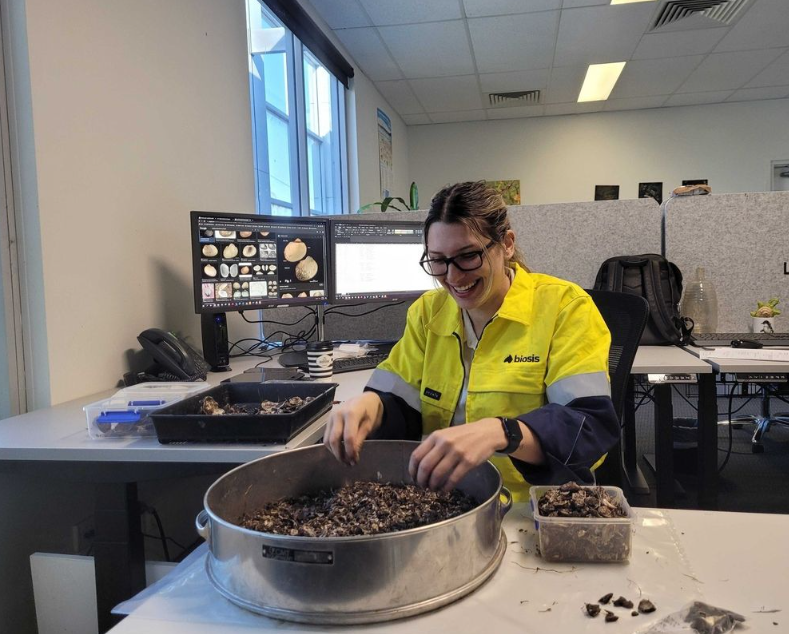
After the excavations, Biosis consultants also provide expert artefact analysis, describing the assemblage of artefacts according to their quantity, representation of different fabrics and forms, and other broad descriptive characteristics.
Biosis heritage consultants interpret the assemblages according to possible functional evidence of how people lived and interacted with each other in context of the site history. This form of analysis applies the understanding from the initial desktop research, combined with the artefact assemblage to interpret how artefacts were used and can give a glimpse into the lives of the people who lived or worked there.
There are two purposes for artefact analysis: to assess the significance of the artefacts, which is necessary for their conservation, and to uncover information about the history and significance of the site. The Biosis historical heritage team possess highly specialised knowledge and will work as a team to support the analysis of any artefacts.
Biosis have staff who possess specialised knowledge in
- Bones
- Glass
- Stones/Drystone walls
- Military
- Transport
- Architecture and Built Heritage
- Material History
Biosis also provides heritage interpretation services and can provide expert guidance on how to care for the artefacts to include heritage in your project design. This can be done by displaying the artefacts in the building or the area that you are developing, for instance.
In Victoria our team will prepare an Artefact Retention and Discard Policy (ARDP), which is required as part of permit conditions for excavations. The ARDP must justify the discard of artefacts using significance, research value, conservation costs, safety/hazard concerns and other policy criteria, and is subject to approval by the Executive Director, Heritage Victoria.